TL;DR
The best villas in Tuscany for groups of 8 to 12 are concentrated in three regions: Chianti, Val d'Orcia, and Maremma. Each has a different character, a different proximity to Florence and Siena, and a different price point. Chianti suits first-time visitors and wine enthusiasts who want city access alongside countryside. Val d'Orcia rewards groups willing to go further for a quieter, more cinematic landscape. Maremma is the region most groups never consider, and the one with the most room to breathe.
Quick Pick
For groups deciding between Tuscany's three main villa regions:
- First trip, want wine country and Florence access: Chianti. Forty-five to sixty minutes to Florence, dense with vineyards and estate cantinas.
- Returning visitors, want slow Tuscany without the crowds: Val d'Orcia. UNESCO-listed landscape, Brunello di Montalcino country, further from tourist traffic.
- Privacy, coastal options, and a lower price point: Maremma. Tuscany's western edge, wilder, less photographed, and often €300 to €500 per person cheaper per week.
- Private chef is the group's top priority: Ask about fully staffed villas in Chianti or Val d'Orcia. Budget €300 to €550 per day for chef service, separate from the villa rental.
- Booking timeline: June through September requires 9 to 12 months lead time. May and October allow 3 to 6 months.
Region Comparison
| Region | Best For | Drive to Florence | Tourism Level | Weekly Rate (8–12 guests) |
|---|---|---|---|---|
| Chianti | Wine-focused groups, city access, first trips | 45–60 min | Moderate | €5,000–€18,000 |
| Val d'Orcia | Slow travel, scenic landscape, returning visitors | 90–120 min | Low | €4,000–€14,000 |
| Maremma | Privacy, coast plus inland, value | 2 hrs | Very low | €3,500–€10,000 |
The question most groups start with is the wrong one. "Where should we stay in Tuscany?" sounds like a single decision. It is actually three: which region suits your group's pace, which villa style matches what you actually want from the week, and which amenities your group will use rather than the ones that look compelling in listing photos.
Tuscany recorded over 52 million overnight stays in 2024, making it one of the most visited regions in Italy. The villa market spans everything from converted farmhouses with a small pool to fully staffed properties with private chefs, wine cellars, and event spaces. The properties suited to a group of 8 to 12 — those with enough en-suite bedrooms, proper outdoor dining, and a kitchen a chef can actually work in — sit in a narrower portion of that market.
This guide covers the three regions where those properties cluster. It is written for groups who want the villa to be the center of the experience, not just a nicer place to sleep. That distinction shapes everything that follows.
What Do the Best Villas in Tuscany for Groups Actually Look Like?
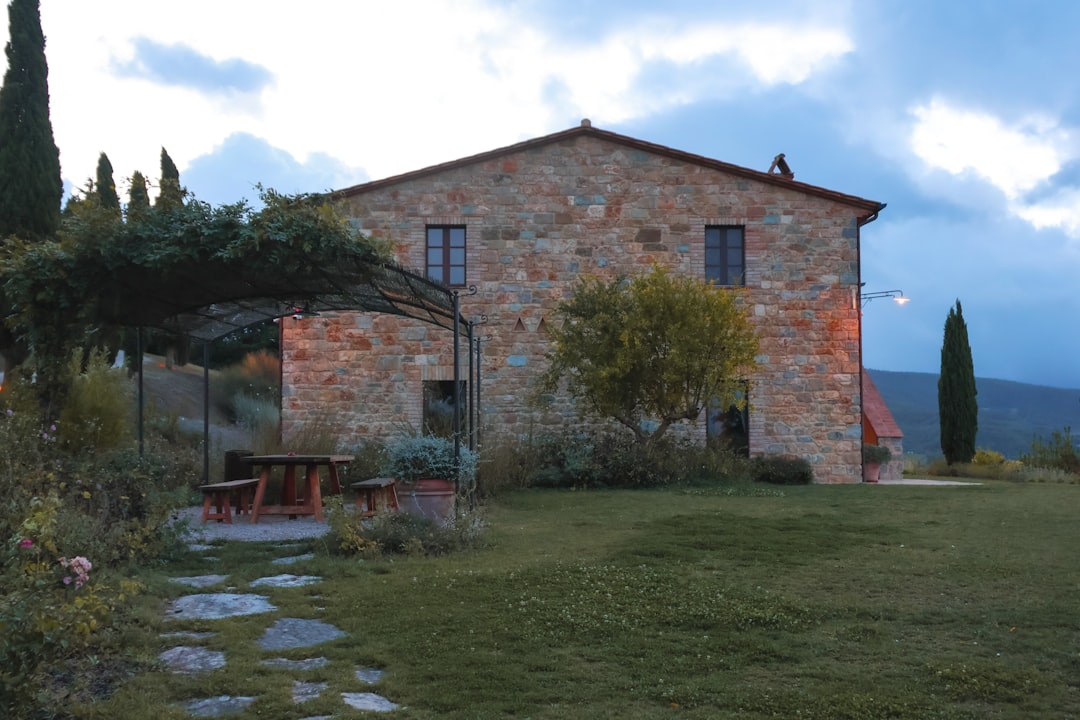
The best villas in Tuscany for groups of 8 to 12 offer a minimum of four to six en-suite bedrooms, a private pool with full afternoon sun, a kitchen large enough for a professional chef, and outdoor dining space that seats the whole group under cover. The region determines the view and the proximity to wine estates, towns, and day-trip destinations.
This matters because a villa in this category is not a large Airbnb. Quality group villas in Tuscany are typically rented through specialist agencies rather than general booking platforms. The vetting process is different, and the properties themselves are often unavailable on the major search sites. A villa found through a specialist comes with a contact who has visited the property, a record of previous guest experience, and a clearer picture of what you are actually booking.
What most groups underestimate is the outdoor space. At a group of 10, you spend a significant portion of the trip at the villa itself. Outdoor dining, morning coffee in the garden, long afternoons by the pool — these hours accumulate. A villa with a cramped terrace and a small pool feels tight by day three. One with a long table in the shade and loungers for everyone feels like the trip itself.
The things that look good in listing photos but rarely justify the premium: private tennis courts (used once, if at all), elaborate formal gardens that require navigating around, home theatres. The things worth paying for: en-suite bathrooms in every bedroom, a chef-capable kitchen with professional appliances and proper refrigeration, a pool that holds sun past 4pm, and a property manager reachable by phone throughout your stay.
Chianti: The Obvious Choice. And Why That Is Not a Problem.
Most groups arriving in Tuscany for the first time choose Chianti. That is not a failure of imagination. It is an accurate read of the region.
Chianti sits between Florence and Siena, which puts two of the most significant cities in Italy within 45 to 90 minutes of the villa. The landscape is the one Tuscany is most associated with: rows of vines, stone farmhouses, olive groves, and roads that move through the hills in a way that makes even a slow drive feel worthwhile.
The wine culture here is integrated into the land itself. The Consorzio del Vino Chianti Classico counts over 500 producers in the Chianti Classico DOCG zone. For a group with wine as a focus, the density of estates is unmatched — private tastings, estate lunches, and cellar tours are available without the difficulty of driving long distances between producers.
The tradeoff is visibility. Chianti is the most visited of the three regions. The villas themselves are private, but the villages, the roads between them, and the most recognizable estates are not. During peak summer months, that tourism pressure is real. If your group wants solitude within the property boundaries, Chianti delivers it. If you want the surrounding territory to feel genuinely quiet, it sometimes will not.
- Best for: Groups on their first Tuscany trip, wine-focused groups, any group that wants Florence or Siena access alongside countryside days
- Why it works: Day trips to Florence and Siena feel simple, not like expeditions. The wine infrastructure means a private estate tasting is one call away.
- Skip if: Genuine remoteness is what your group is after. Chianti is beautiful and culturally rich, but it is not wild.
Val d'Orcia: For Groups Who Have Already Done Tuscany
The Val d'Orcia is a UNESCO World Heritage Site. That designation is worth taking seriously.
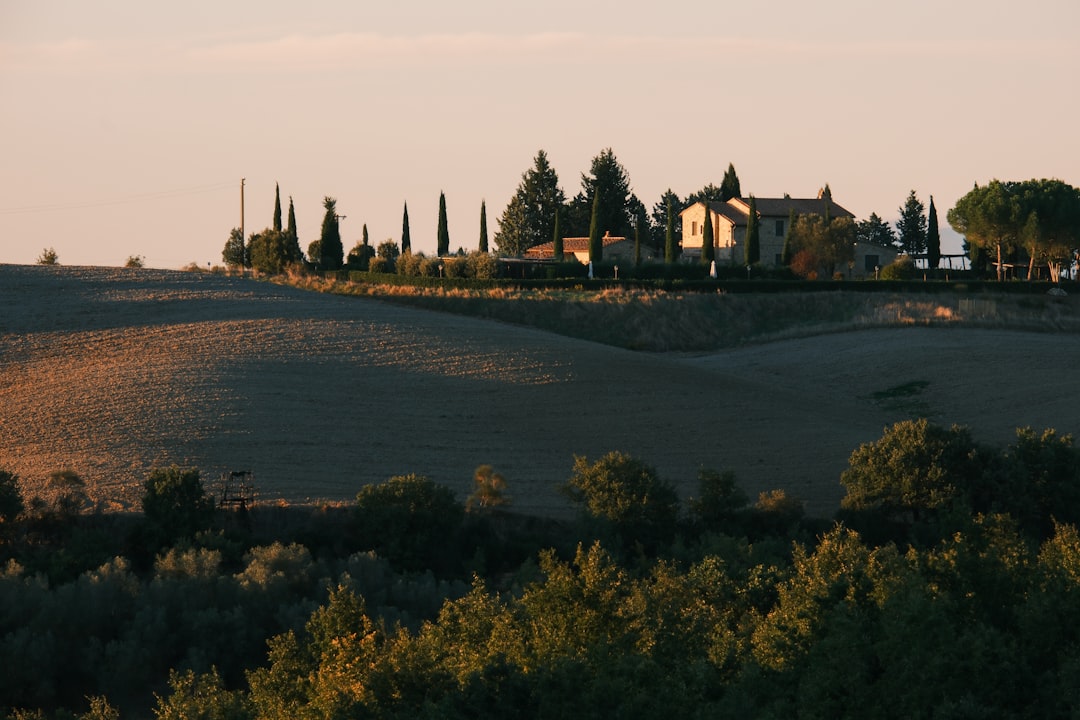
It covers the open valley south of Siena, roughly between Montalcino, Pienza, and Montepulciano. The landscape is the one you have seen in photographs: cypress rows against pale hills, open valley light at late afternoon, a quiet that feels designed rather than accidental. The distance from Florence is real. Plan 90 to 120 minutes each way, which is why most groups who land here have already seen Florence on a previous trip and are prepared to let it go for the week.
The wine is Brunello di Montalcino, one of Italy's most respected appellations. The Consorzio del Brunello di Montalcino traces the formal appellation to 1980, but the estates have been refining their approach for generations. Private visits to producers here carry a different quality than the standard Chianti tasting: more time, more context, and more of the conversation that makes the difference between a pleasant hour and a trip-defining experience.
Villas in Val d'Orcia tend to sit on wider plots, with more open visual space. The postcard feeling of Tuscany, where you look in any direction and see nothing built after 1850, is more consistently achievable here than in the more developed Chianti zone.
- Best for: Groups returning to Tuscany, groups prioritizing landscape depth and wine quality over city access, groups who want the slower pace the region enforces
- Why it works: The scale of the landscape changes the pace of the trip. You slow down without deciding to.
- Skip if: Any member of your group has Florence or Siena as a daily priority. The drives are manageable, but they are not short.
Maremma: The Region Most Groups Never Consider
Maremma is Tuscany's western edge, and it is the region most villa searches never reach.
It occupies the southwestern coastal strip and the hills behind it. Historically it was one of the least developed parts of Tuscany: difficult terrain, a ranching and fishing culture with little interest in becoming a destination. That history is now its asset. The Parco Regionale della Maremma protects a stretch of dunes, hot springs, and coastal forest that has no equivalent elsewhere in the region. The wine appellation, Morellino di Scansano, produces Sangiovese-based reds that are less celebrated than Brunello or Chianti Classico but increasingly well-regarded by those paying attention.
The practical case for Maremma is space and value. Villas here come at a meaningfully lower price than equivalent properties in Chianti. For groups where cost per person matters, the difference can be €300 to €500 per person per week — enough to cover chef dinners, estate wine, or a boat day on the coast.
The distance from Florence is real. It is roughly two hours each way. Groups that choose Maremma do so as a base for its own surrounding territory: the coastal towns of Orbetello and Porto Ercole, the hot springs at Saturnia, the medieval hill town of Pitigliano. If the goal is Tuscany-plus-coast in the same week, and your group does not need to replicate the standard Chianti itinerary, Maremma is the answer.
- Best for: Groups seeking genuine privacy, groups that want coastal and inland options within the same base, groups where budget per person is a real variable
- Why it works: The lower tourist density means the authentic interactions — with local producers, restaurant owners, and market vendors — that feel scarce in Chianti are still accessible here.
- Skip if: Efficient access to Florence, Siena, or the major cultural sites is a group priority. Maremma rewards groups willing to let Tuscany come to them.
Seven Questions to Confirm Before You Book
The listing photos answer what the villa looks like. They do not answer how it functions for a group of 10.
Before signing a rental agreement, confirm these seven things:
- Are all bedrooms en-suite? For a group of 10, shared bathrooms create a morning bottleneck that sets the tone for the day.
- What direction does the pool face? A pool in shade from 3pm is a pool no one uses after lunch.
- Is the kitchen set up for a professional chef? Professional appliances, a proper oven, refrigeration with enough capacity for 12 — a domestic kitchen cannot support a chef cooking at that scale.
- Are outside chefs permitted? Some properties require their own approved providers. Confirm this before making independent arrangements.
- What does the access road look like? Some Tuscany properties are reached via several kilometers of unpaved track, which affects arrival logistics, car rentals, and the daily texture of coming and going.
- What is the minimum stay? Most quality group villas in Tuscany carry a 7-night minimum during peak season.
- Who is reachable during the stay? A named property manager or on-call contact is a meaningful difference when something stops working mid-week.
For a deeper read on which villages and areas offer the most day-to-day, see our guide to where to stay in Tuscany.
How Much Does a Tuscany Group Villa Cost?
A villa sleeping 8 to 12 guests in Tuscany runs between €4,000 and €18,000 per week, depending on region, season, and amenities. Split across 10 guests, a week at €12,000 works out to €1,200 per person — roughly equivalent to three or four nights in a mid-range Florence hotel, without the shared space, the private garden, or the ability to sit together at one table.
Chef service sits on top of the villa rate. Budget €300 to €550 per day, plus grocery costs. Most groups find that two or three chef dinners per week rather than every night creates the better rhythm: restaurant evenings alternate with villa meals, and the contrast makes both more memorable.
Peak season, July and August, runs 20 to 40 percent above shoulder rates. May, early June, and September offer the most favorable combination of price and weather. October in Chianti is harvest season — it carries genuine character and runs at lower rates than summer, but that window books quickly once it opens.
How Tuscany Compares to Other Group Villa Destinations
For groups deciding between destinations rather than regions within Tuscany, the two most common alternatives are the Amalfi Coast and Provence.
Tuscany versus the Amalfi Coast. The Amalfi Coast trades villa space for dramatic coastal scenery. Group properties there tend to be smaller, with terraced outdoor areas rather than flat gardens and pools. The setting is visually striking, but logistics are harder: narrow roads, limited parking, higher prices for comparable bedroom counts. For groups where the villa itself is the primary experience, Tuscany delivers more space per euro. For groups where coastline views and boat days are the point, the Amalfi Coast is a different kind of trip.
Tuscany versus Provence. The terrain and pace are similar. Both regions have developed villa infrastructure and serious food and wine cultures. Tuscany is more navigable for English-speaking groups visiting for the first time: the wine estates are more accessible, the cuisine is more familiar as an entry point, and the geography is compact enough to feel manageable. Provence rewards groups drawn specifically to its landscape and culture — not a lesser alternative, but a different answer to a different question.
How to Plan a Tuscany Group Villa Trip the Right Way
Most groups begin with a villa search and end up in a shared document no one has time to manage. The cost comparison is incomplete, with chef, wine, transfers, and experiences left uncounted. The shortlist has five properties too similar to distinguish. The group chat has gone quiet. Nothing is booked.
The Wndrlust approach to Tuscany starts with the villa and builds outward. We identify properties suited to your group's character and size, coordinate the private chef if that is the intent, build a week with enough structure to function and enough space to breathe, and stay reachable throughout. The details — which cantina to visit in Chianti, where to eat in Montalcino, when to skip the circuit entirely and simply sit at the villa — are the kind of local knowledge that takes years to develop independently.
If you are considering a curated Tuscany group voyage, the structure we recommend is five to seven nights in one villa, one region, no hotel nights, and enough days to settle in and actually feel the place. More on how we compose the week in our Tuscany itinerary guide.
The Villa Is the Point
A group of 10 can spend a week in Tuscany navigating hotel rooms, managing restaurant reservations for a large party, and making compromises a smaller group would not have to make. Or they can have a week where the day starts with coffee in a garden, ends at a long table under string lights, and the hours in between were theirs to compose.
Tuscany has the landscape, the wine, and the food culture to support a genuinely memorable group experience. What it requires is a different approach than most groups bring to it: one villa, one region, enough days to settle in, and the infrastructure to let the week unfold rather than manage it.
Which region you choose shapes the character of that experience. Chianti, Val d'Orcia, and Maremma are each coherent answers to a different version of the question. The right one is the one that fits what your group actually wants from the week.
FAQ
What are the best regions in Tuscany for group villa rentals?
Chianti suits first-timers who want wine country and Florence access in the same week. Val d'Orcia works for groups seeking slower, more cinematic Tuscany further from tourist traffic. Maremma offers coastal access and genuine privacy at a lower price point, though it requires more planning upfront.
How much does a group villa in Tuscany cost per week?
A villa sleeping 8 to 12 in Tuscany typically costs between €4,000 and €18,000 per week, depending on region, season, and amenities. Chianti commands the highest rates. Val d'Orcia and Maremma run lower. Peak summer rates in July and August add 20 to 40 percent over shoulder season pricing.
Do Tuscany villas include a private chef?
Most Tuscany villas do not include a private chef as standard. Chef service is almost always available as an add-on, typically ranging from €300 to €550 per day plus groceries. Some villas require the use of pre-approved chefs; confirm this before making independent arrangements.
How far in advance should we book a group villa in Tuscany?
For peak dates between June and September, booking 9 to 12 months out is standard for properties sleeping 8 or more. The properties with private pools, dedicated chef kitchens, and strong reviews fill earliest. Shoulder season allows lead times of 3 to 6 months.
What size villa do we need for a group of 10 to 12 people?
A group of 10 to 12 needs a villa with 5 to 6 en-suite bedrooms. Verify that every bedroom has its own bathroom; shared bathrooms in a group that size create friction. Look also for at least two living areas or an outdoor dining space that seats the full group together.