TL;DR: For tuscany group travel, the decision starts with region: Chianti for accessibility and wine, Val d'Orcia for scenery and silence, Maremma for something wilder and less curated. A villa of 8–12 makes the per-person economics work and gives the group a home base the trip orbits around. The food and wine calendar drives the timing. This guide covers all three.
Quick Pick: Which Region for Your Tuscany Group Trip?
- Chianti, first Tuscany trip: Dense villa availability, easy drives to Florence (45 min) and Siena (30 min), Chianti Classico on every dinner table. Best months: May, September.
- Val d'Orcia, for scenery and pace: UNESCO-listed landscape, cypress-lined roads, fewer tourists than Chianti. Stronger choice for groups on a return visit to Italy. Best months: May, October.
- Maremma, for something wilder: Coastal hills, cinghiale country, cheaper villas with fewer neighbors. For groups who want Tuscany without the polished surface.
- Group size sweet spot: 8–12. Per-person costs drop sharply above 8, and villa dynamics (pool, shared meals, private space) function well at this range.
- Book 10–14 months ahead for May and September. Prime-season villas in Chianti and Val d'Orcia fill well in advance.
| Region | Best for | Drive to nearest city | Tourism level | Nightly villa range | Signature experience |
|---|---|---|---|---|---|
| Chianti | First trips, wine-focused groups | 45 min to Florence | Moderate | €800–€3,500 | Classico estate tastings |
| Val d'Orcia | Scenery, returning visitors | 1h to Siena | Low to moderate | €600–€2,500 | Brunello producers, UNESCO drives |
| Maremma | Lower budgets, wilder terrain | 1.5h to Grosseto | Very low | €500–€1,800 | Coastal hills, authentic agriturismi |
Introduction
Most groups approach Tuscany the wrong way. They book a hotel in Florence, rent cars, and spend the week driving between hilltop towns that reward patience but punish rushing. By Thursday, the itinerary has collapsed under the weight of everyone's preferences and the logistics of moving eight people through a narrow medieval lane.
The alternative is not complicated. A private villa, one region, and a week that lets Tuscany do what it does well: slow you down.
Tuscany group travel has a logic of its own. The region is large, but the meaningful choices are few. You pick a base in Chianti, Val d'Orcia, or the Maremma. You stay. You eat well, drink well, and make the day trips that are worth making. You skip the ones that aren't.
This guide covers the three regions worth knowing, what the food and wine calendar actually requires, how the villa economics work, and how to pace a group week that doesn't feel like a tour.
What Makes Tuscany Work for Group Travel?
Tuscany works for group travel because the villa model maps onto how groups actually function. A ten-person group in a Chianti estate costs roughly the same per person as four hotel rooms in Florence, and delivers a private pool, a full kitchen, and no shared lobby. The landscape enforces a pace that groups rarely find in cities: slower mornings, longer lunches, evenings that don't need a plan.
The practical logic holds up too. Tuscany's main experiences, including wine estate visits, cooking lessons, truffle hunts, and hilltop town days, are all designed for small groups rather than solo travelers. A private sommelier session at a Brunello producer in Montalcino costs roughly the same for 8 people as it does for 2. A cooking lesson at a Chianti farmhouse works at group scale in a way that a restaurant reservation doesn't.
What most groups get wrong is trying to cover too much. The Florence-Siena-Cinque Terre loop is a flight itinerary, not a Tuscany stay. The groups who find Tuscany satisfying are the ones who pick a region, commit to it, and let the week breathe. If the group hasn't done this kind of villa-based travel before, our Tuscany itinerary guide outlines how a week structured around staying actually feels different from one structured around moving.
The Three Regions: Chianti, Val d'Orcia, and Maremma
Tuscany is large enough to absorb a lifetime of visits. For a villa-based group stay of one week, three regions deserve serious consideration.
Chianti
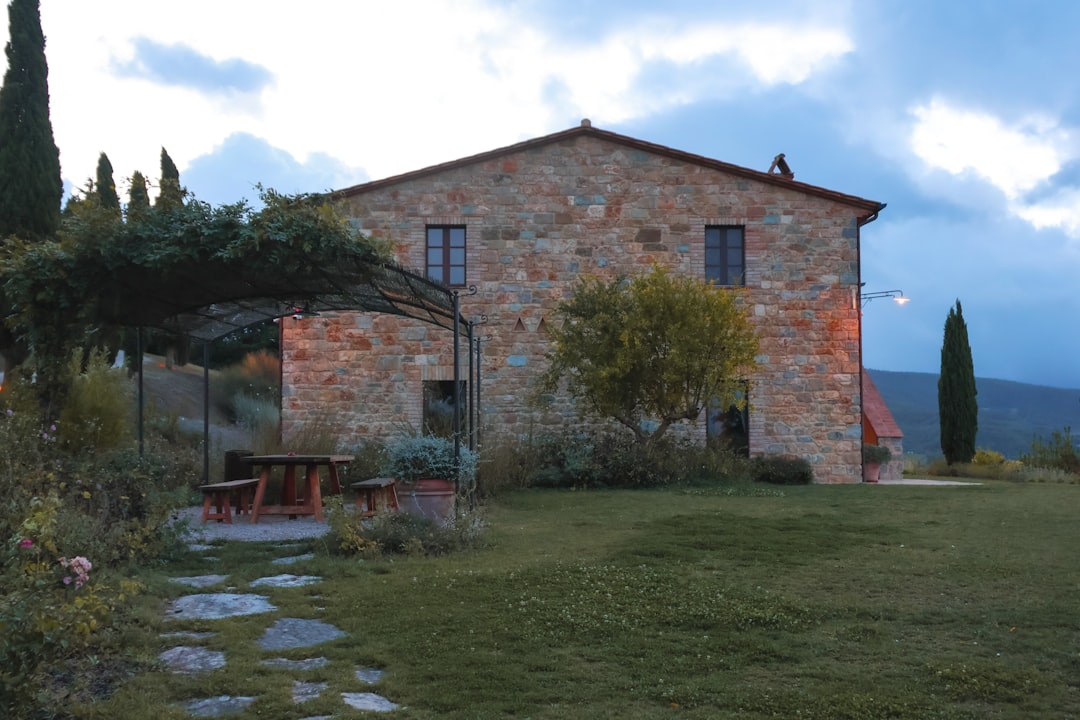
The hills between Florence and Siena hold the highest concentration of quality villas in the region. It is the most familiar option, which means the infrastructure is well-developed: wine estates with proper tasting rooms, restaurants able to seat a table of ten, and roads accessible by standard rental cars.
The Chianti Classico wine zone, governed by the Consorzio del Vino Chianti Classico, runs 72 kilometers from north to south between the two cities. Almost every estate offers tastings; the smaller ones offer private appointments that outperform any public tour.
- Best for: First visits to Tuscany, wine-focused groups, anyone with Florence or Siena on the list
- Why it works: 45 minutes from Florence, 30 from Siena. Villa availability is broad, the rental market is competitive, and the region has enough within it to fill a week without leaving the hills.
- Skip if: The group wants to avoid other tourists. In July and August, the main towns, including Greve in Chianti and Panzano, fill with visitors. Base yourself in the deeper countryside rather than close to the obvious town centers.
Val d'Orcia
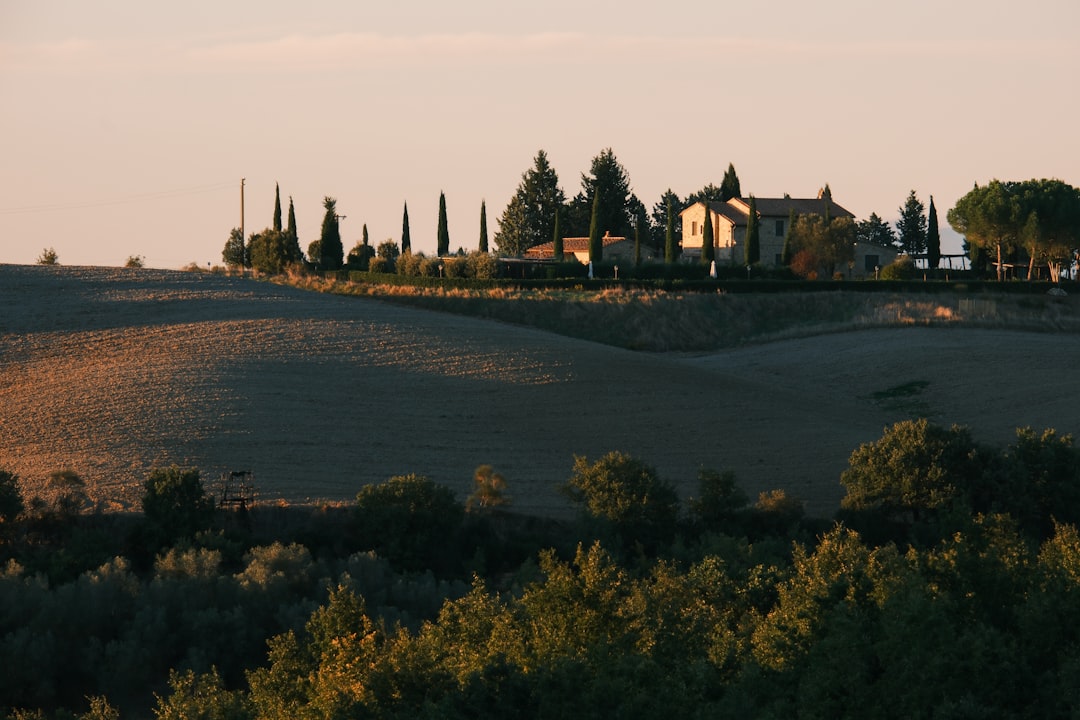
The Val d'Orcia, inscribed as a UNESCO World Heritage Site in 2004, is a different proposition. Cypress avenues, ochre-colored farmhouses, and a landscape that looks composed rather than simply grown. Tourism levels are lower, the pace is slower, and the scenery is more open and dramatic than Chianti.
Montalcino anchors the south of the valley, home to Brunello di Montalcino, one of Italy's most serious red wines. Pienza, built as a Renaissance ideal city, sits to the east. San Quirico d'Orcia connects them. Driving between the three takes under 40 minutes.
- Best for: Groups on a return visit to Italy, those prioritizing landscape over logistics, wine lovers drawn to Brunello
- Why it works: The towns are smaller and less visited than Chianti's equivalents. Driving feels like a reward, not a commute. The valley at dawn or dusk is the kind of image that doesn't require a camera to hold.
- Skip if: The group needs Florence. A Val d'Orcia base puts you 90 minutes from the city, which is a long day trip if someone has a specific museum booking in mind.
Maremma
The southwestern coastal hills are the least known of the three for international groups, and that is the point. Wilder terrain, cheaper villas, and far fewer tourists. The food culture leans coastal: fresh catch, cinghiale (wild boar ragu), pecorino from the Maremma sheep.
Villa prices here run 20–30% lower than comparable properties in Chianti, and the Parco Regionale della Maremma offers walking and cycling through pine forest and coastal marshland that Chianti doesn't have.
- Best for: Groups seeking authenticity over aesthetics, returning visitors who already know Chianti, budgets that don't stretch to estate pricing
- Why it works: The region is genuinely off the tourist circuit. A group renting a Maremma farmhouse will go two or three days without seeing another tourist, which, for groups burned out on overtourism, has real value.
- Skip if: The group's primary goal is classic Tuscan wine estates and rolling vineyard scenery. Maremma is a different register, and groups who expect Chianti and get Maremma may feel the mismatch.
The Villa Is the Point
The mistake most groups make is treating the villa as accommodation. It is not. It is the experience.
A private villa in Tuscany gives the group something no hotel replicates: a shared domestic space. The kitchen where someone makes breakfast while others are still sleeping. The terrace where the group reconvenes at sunset without coordinating. The pool that becomes the default afternoon plan, without a towel reservation required.
These moments, unremarkable individually and irreplaceable collectively, are what groups tend to remember most. Not the museums. Not the day trips. The evenings at that table.
The economics work clearly for groups of 8 or more. Eight people sharing a property at €1,500 per night pay €187 per person per night. The same group in four double rooms at an agriturismo often pays the same or more, with less space, no kitchen, and no terrace of their own. Our guide to where to stay in Tuscany covers the property decision in detail, including what to look for in a pool, kitchen, and bedroom configuration for different group sizes.
The villa also handles different speeds within the group. Someone wants to read by the pool until noon. Someone else wants to drive to Siena by 10am. A villa accommodates both without friction. A hotel lobby does not.
What Should a Group Actually Do in Tuscany?
A Tuscany group week should be built around three or four anchored experiences, not a daily itinerary. The experiences that scale well for groups, including cooking lessons, estate tastings, and truffle hunts, each take half a day and leave the rest unscheduled. That unscheduled time is where Tuscany actually happens.
Three experiences worth anchoring a week around:
A cooking lesson at a Chianti farmhouse. Not a demonstration, a hands-on session. Groups of 8–12 work well in a farmhouse kitchen: fresh pasta, ribollita, seasonal desserts. The meal is the lesson; lunch follows immediately after. These run two to four hours and cost €70–€120 per person for a private group booking.
A private tasting at a Brunello producer. The Consorzio del Brunello di Montalcino represents dozens of estates with proper tasting facilities. A private session for a group of 10 at a smaller family estate, not the famous labels, but a producer with a sommelier and proper cellars, runs roughly the same cost as a mid-range restaurant dinner. The experience is not comparable.
A truffle hunt in the Val d'Orcia. Autumn brings white truffles; late winter and spring bring black ones. A half-day with a hunter and dogs covers ground that no tour could replicate. The haul typically goes directly to lunch, prepared at the hunter's farmhouse or back at the villa.
What to skip: Florence on a Saturday in July. The Ponte Vecchio at noon in summer. San Gimignano's main street during any school holiday period. These experiences are designed for volume tourism, and a group Tuscany visit should move in the opposite direction.
When Is the Right Time for Tuscany Group Travel?
May and September are the strongest months for tuscany group travel. May offers warm temperatures, long light, and vineyards in bloom before the summer peak. September carries harvest energy: the Chianti vendemmia begins in late September, the air cools at night, and the light acquires the particular golden quality that makes late-afternoon drives across the Val d'Orcia feel like something earned.
April is cooler but functional. Spring wildflowers across the clay hills of the Val d'Orcia make up for the unpredictable weather, and the lack of crowds in April is genuinely significant. October is quieter still, with truffle season underway and the olive harvest beginning in the second half of the month.
July and August are workable but require adjustment. Villas are at their price ceiling. Hill towns crowd in the middle of the day, and the heat between noon and 4pm limits outdoor activity. If summer is the only viable window, plan accordingly: early mornings for town visits, afternoons at the pool, evenings for everything else. The villa absorbs the midday heat better than any hotel room.
Tuscany vs the Alternatives
Groups weighing Tuscany against other destinations tend to face the same comparison points.
Tuscany vs the Amalfi Coast: The Amalfi Coast is more dramatic and considerably more contested. The coastline requires boats or narrow cliff roads; moving a group of 10 is expensive and logistically demanding. Tuscany is kinder to groups. You rent cars, drive comfortably between properties, and no one is sharing a bus on a cliffside corniche in July. Our Amalfi Coast itinerary guide covers the southern Italy experience for groups who are weighing both and want a clear comparison.
Tuscany vs Provence: Provence runs a similar wine-country-villa template. The food culture is distinct but equally serious (Provençal vs Tuscan, neither inferior). The lavender season is narrow, peaking in early July, which concentrates demand. Pricing is broadly comparable. Tuscany has more concentrated villa infrastructure and more direct flight options from North America. Provence rewards groups who have already done Tuscany and want the same register in a different landscape.
Tuscany vs another Italy option: For groups who have done Tuscany already, the Amalfi Coast and southern Italy offer a genuinely different register. For groups new to villa travel, Tuscany is the most forgiving first choice: the logistics are manageable, the experiences are varied, and the week tolerates different priorities within the group.
How to Plan Tuscany Group Travel the Right Way
Most groups that attempt Tuscany independently hit the same friction: the shared spreadsheet that never quite resolves, the restaurant that can't accommodate ten at 8pm on a Saturday, the wine estate that has been fully booked since January, and the group chat that turns planning into a second job.
The alternative is to hand the scaffolding to someone who already has the relationships. A curated voyage means the villa is chosen for your group's size and dynamic, the experiences are confirmed before you land, and the week has a structure the group can relax into rather than maintain. Full flexibility within each day remains. But the negotiation is finished before the trip starts.
Wndrlust designs villa-based group voyages in Tuscany for groups of 8–12 who want that version of the experience. See the current Tuscany voyage or explore all current voyages to understand how we build a week.
Conclusion
Tuscany rewards groups willing to stay still. The region is not a checklist of towns and tastings; it is an argument for a different pace, made in olive oil and cypress trees and an evening light that seems arranged to delay dinner.
The choice between Chianti, Val d'Orcia, and Maremma is less about which is better and more about which version of Tuscany matches the group. First-time visitors tend toward Chianti. Return visitors tend toward the Val d'Orcia. Groups looking to find something their friends haven't found tend toward the Maremma.
What all three share is the villa logic: one property, one week, the group's own space to move in and out of. That is the unit of Tuscany group travel that actually works. The wine and the food and the light on the hills follow naturally from there.
FAQ
Is Tuscany good for group travel?
Tuscany is well suited to group travel, particularly for villa-based stays. A private villa for 8–12 gives the group shared space, a pool, and a home base, while keeping per-person costs lower than comparable hotel arrangements.
What is the best region in Tuscany for a group villa?
Chianti is the most accessible for first-time groups, with dense villa availability and easy drives to Florence and Siena. Val d'Orcia offers quieter, more dramatic scenery and is the stronger choice for groups prioritizing pace over logistics.
How much does a Tuscany group villa cost per person?
For a group of 8–12, expect to pay roughly €150–€350 per person per night for a quality villa with a pool. Total weekly villa costs range from €3,500 to €12,000 or more depending on region, size, and season.
When is the right time for Tuscany group travel?
May and September are the strongest months: warm enough for outdoor dining, not yet at peak crowds, and with harvest energy arriving in September. July and August bring heat, higher prices, and tourist volume that works against Tuscany's slower register.
What are the best food and wine experiences for groups in Tuscany?
A cooking lesson at a Chianti farmhouse, a private sommelier tasting at a Brunello producer in Montalcino, and a truffle hunt in the Val d'Orcia are the three experiences most worth building a group week around.