TL;DR: A 7-day tuscany itinerary works when it's structured around one region rather than the whole map. Choose a base in Chianti or Val d'Orcia, anchor the week in a private villa, plan two or three day trips, and protect the remaining days from being over-scheduled. The slow hours — the morning coffee, the unplanned afternoon, the dinner that runs long — are what most people carry home.
Quick Pick: Which Tuscany Region Is Right for Your Group?
- First trip, want variety: Chianti. Forty minutes to Florence, forty-five to Siena, wine country on your doorstep.
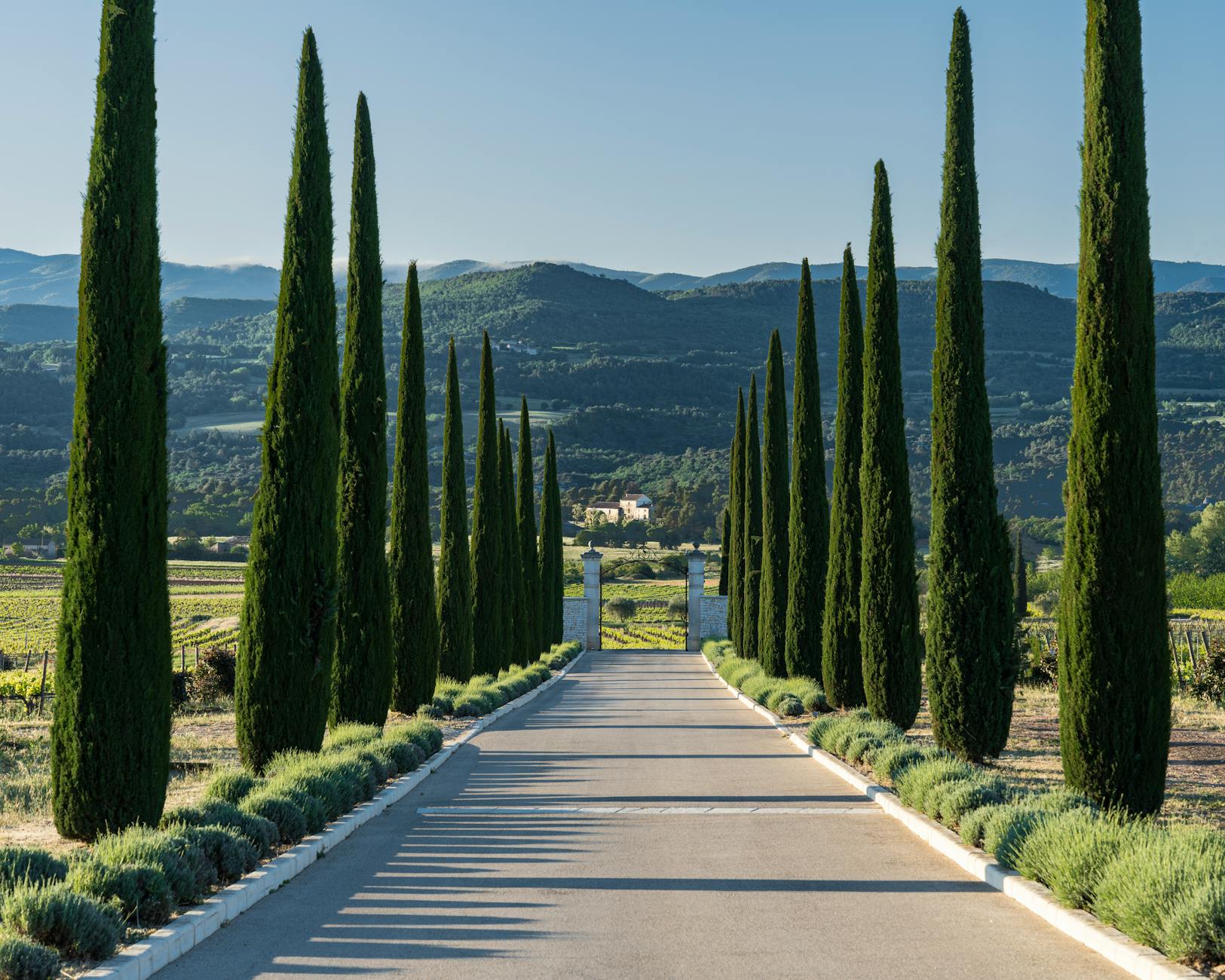
- Landscape is the priority: Val d'Orcia. The UNESCO-listed hills, cypress avenues, Pienza, and Montalcino, without the Florence commute.
- Mixed interests (countryside and coast): Maremma. The only Tuscan region where you can have vineyard views in the morning and the Tyrrhenian Sea in the afternoon.
- Culture-first with less driving: Lucca or the Lunigiana. Walled city, olive groves, medieval towers, easy reach of Pisa and Cinque Terre.
- Best months: May, September, early October.
- Skip: Florence as your base. It's worth two full days as a day trip, not as a headquarters for the week.
| Region | Best for | Drive to Florence | Drive to Siena | Crowd level | Character |
|---|---|---|---|---|---|
| Chianti | First trips, wine focus, variety | 40 min | 45 min | Moderate | Rolling hills, wine estates, classic Tuscany |
| Val d'Orcia | Landscape, slow travel, hilltop towns | 2 hrs | 1 hr | Low–Moderate | Cypress avenues, UNESCO clay hills, Pienza |
| Maremma | Mixed groups, wine and coast, off-path | 2.5 hrs | 1.5 hrs | Low | Coastal terrain, wild interior, contemporary wine |
| Lucca / Lunigiana | Culture-first, less driving, medieval towns | 30 min to Pisa | 1.5 hrs | Moderate | Walled city, olive groves, tower villages |
Introduction
Most people approach a Tuscany itinerary the same way: Florence for three days, a day trip to Siena, one afternoon in San Gimignano, and then whatever time remains for "the countryside." The result is a week where you've seen a great deal and experienced very little.
The countryside is the point. The hill towns are not pitstops between museums. The winery visit is not a checkbox. The long afternoon at a stone table with wine and no particular agenda is not wasted time.
A villa-based Tuscany itinerary inverts the usual structure. You stay in one place, go deep, and find the region reveals itself differently when you return to the same kitchen, the same view, the same roads. This guide is written for groups of six to ten who want a week that feels intentional. The structure is designed around a private villa as the anchor, with day trips as extensions rather than the main event.
What Does a 7-Day Tuscany Itinerary Actually Look Like?
A well-structured 7-day tuscany itinerary reserves three to four days without major travel. The base region handles two or three day trips — Florence, Siena, a hill town. The remaining days are for markets, wineries, cooking classes, and the unhurried rhythm that makes Tuscany feel like a real week rather than a tour.
That ratio matters more than most groups realize. The impulse is to fill every day with a destination. Tuscany resists this. Its most memorable hours arrive without planning: a morning fog lifting over the vineyard, a lunch that stretches past three, a table outside that no one wants to leave when the light finally goes.
Three day trips is enough. The rest of the week should stay rooted.
Choosing Your Base: Three Regions, Three Different Tuscany Trips
Chianti, Val d'Orcia, and Maremma are three different experiences held inside the same border. The choice of base shapes the entire week.
Chianti
Chianti is the most practical base, and not in a diminishing way. The region sits at the geographic center of Tuscany: Florence is 40 minutes north, Siena is 45 minutes south, and the estates that produce Chianti Classico line the roads between them. A group based here can reach most of the region's hill towns in under an hour and still be back for dinner at the villa.
- Best for: Groups on a first Tuscany voyage, groups with diverse interests, anyone who wants winery visits and city days in the same week.
- Why it works: Private villas in Chianti are some of Italy's strongest options: pools, working wine estates nearby, and views toward Siena that haven't changed since the Renaissance.
- Skip: The large commercial estates near the main highway between Greve and Castellina. They're built for volume. Smaller family producers in Panzano or Gaiole offer a quieter, more personal hour with someone who actually made the wine.
Val d'Orcia
The Val d'Orcia was inscribed as a UNESCO World Heritage Site in 2004, recognized for a landscape whose flat chalk plains, conical hills, and fortified ridge settlements shaped how Western culture has imagined the Italian countryside for six centuries. The reality delivers on the image.
The tradeoff is remoteness. Florence is two hours each way, which makes a day trip possible but tiring. The better approach is to make Siena your city excursion and spend the remaining days inside the valley: Pienza in the morning, Montalcino in the afternoon, the Crete Senesi on a drive with no fixed destination.
- Best for: Groups who have already seen Florence, groups making Tuscany the whole trip rather than a stop, landscape-first travelers.
- Why it works: The density of small towns within a 30-minute drive is unmatched in the region. Each hilltop town is a full afternoon, and none require advance planning to enter.
- Skip: Attempting the Val d'Orcia as a day trip from Florence or the Amalfi Coast. It only gives what it has when you slow down enough to receive it.
Maremma
Maremma is the least-known of the three, which is part of its character. The region combines inland Tuscan landscape with a Tyrrhenian coastline, making it the only area where a group with mixed interests can satisfy both in a single day. The winemaking is distinct from the north: forward-thinking reds built on different soils and a different philosophy than the Sangiovese estates of Chianti.
- Best for: Groups traveling in September, when the sea is warm and inland temperatures have dropped; groups on a second or third Tuscany voyage.
- Why it works: Crowd levels are significantly lower than Chianti or the Val d'Orcia, and the sense of discovery the more famous regions have lost remains here.
- Skip: The beach towns in August. They belong to Italian families on holiday, which is charming in its way, and also very loud.
A Villa-Based Week: How to Structure the Days
A 7-day itinerary in Chianti runs roughly as follows. Adjust the day trips for your base region.
Day 1 — Arrive, settle, no agenda Reach the villa in the afternoon. Open wine. The first evening is for the group to find its rhythm, not for logistics. A light dinner at the villa or the nearest village.
Day 2 — Florence Drive in before 9 AM to reach the Uffizi or the Accademia before the lines form. Two or three hours in the museums. Lunch at a neighborhood trattoria. Return by late afternoon.
Day 3 — Winery and local roads A private tasting at a Chianti estate. Most family producers accommodate a group of eight to ten and pour three to five wines with an informal food pairing. The afternoon is loose: an olive oil producer, a hilltop village, or nothing more than the road back through the vineyards.
Day 4 — Siena Siena rewards an early arrival. The Piazza del Campo is the organizing principle of the whole city and worth an hour on its curved brick slope. The Duomo is worth the detour. Return by mid-afternoon for dinner at the villa.
Day 5 — Cooking class at the villa An in-villa cooking class changes the day without requiring any driving. A good cook teaches pasta and a main course, the afternoon becomes the meal, and the recipes come home. This is often the day groups mention first when asked.
Day 6 — Val d'Orcia or San Gimignano From Chianti, Val d'Orcia is an hour south. Pienza in the morning, Montalcino in the afternoon. Or, if the group wants towers and medieval street plans instead, San Gimignano is 30 minutes west and manageable in a half day.
Day 7 — Last morning, unhurried The final morning at a Tuscan villa should not be used for errands. Coffee, the last breakfast, a walk down the property. Departure midday or after.
What Should You Skip on a Tuscany Itinerary?
Skip the day-trip-everything approach. Most tuscany itineraries pack Florence, Siena, San Gimignano, Pienza, and Montepulciano into a single week of driving. That is not a Tuscany experience. That is a highlight reel that leaves you exhausted and not fully present for any of it.
Specific things to cut:
- San Gimignano in July or August. The towers are still there in May. The queues are not.
- Wine tastings at the largest commercial estates near the main highways. They're designed for volume, not for a group that wants to speak with an actual winemaker.
- Cooking classes held in hotel kitchens. An in-villa class, taught by someone who has cooked these dishes for her own family, is a different thing entirely.
What most groups under-schedule: mornings at the villa. The view before 8 AM is often the trip's quietest hour. Most travelers sleep through it because the previous night's dinner ran long, which is a completely acceptable outcome.
When Is the Right Time to Visit Tuscany?
May and September are the months that give you the full Tuscany experience without August's heat and saturation. In May, the hills are green, wildflowers run along the roadsides, and the light arrives early. In September, the landscape turns golden, the harvest begins in the vineyards, and the hill towns belong more to the Tuscans than to the tourists passing through.
October holds well into the month, though evenings cool quickly. April is reliable but occasionally wet. July and August are crowded and hot in a way that affects outdoor dining significantly. If summer months are unavoidable, Maremma's coast access makes them more bearable.
Visit Tuscany reports that the region recorded more than 52 million overnight stays in 2025, with average accommodation rates rising 9.1% year-over-year. Booking a villa four to six months ahead of a May or September date is the current market reality, not overcaution.
Tuscany Versus the Alternatives
For groups deciding between regions, the realistic alternatives are the Amalfi Coast and Provence.
Tuscany vs. the Amalfi Coast
The Amalfi Coast itinerary is a different kind of week: cinematic, vertical, built around sea and spectacle. It is also harder to navigate, more crowded in peak season, and less suited to a villa experience centered on slow, inland days. Tuscany is better for groups who want depth. The Amalfi Coast is better for groups who want the drama of the coastline. They rarely compete for the same kind of week.
Tuscany vs. Provence
Provence offers a comparable landscape rhythm: lavender rather than cypress, rosé rather than Brunello, hilltop villages rather than hilltop towns. For groups whose priority is food and morning markets, Provence is a genuine alternative. For groups who want Renaissance art and hill towns on the same day trip, Tuscany is the clearer choice.
Tuscany vs. itself
The most common comparison is between Tuscany's own regions. A first week in Chianti, a second in Val d'Orcia, a third in Maremma: each opens differently. The region rewards return.
How to Experience Tuscany the Right Way
The version most people plan is a hotel in Florence, a rental car, and a different village each day. Efficient, and also how you leave feeling like you moved through Tuscany rather than into it.
The version that holds longer is a private villa, one region, a group of people worth sharing a table with, and a week structured around the rhythm of the place. The planning friction most groups want off their hands: finding and vetting a villa that works for eight to ten people (pool, functional kitchen, bedrooms that don't require negotiation), booking the winery and the cooking class and the dinner table in the village piazza, and building the week so the day trips don't collide.
That is the version Wndrlust composes. The Tuscany voyage is designed for groups who want the well-considered week rather than the self-managed one. If you're at the planning stage and want to understand what the curated version of this itinerary looks like, explore current voyages.
Conclusion
A 7-day Tuscany itinerary works when it is built around staying rather than moving. Pick one region, anchor the week in a villa, plan two or three day trips, and protect the rest from being filled.
The version people return home talking about is the one where Tuesday afternoon went nowhere in particular, and the wine at dinner came from the estate three kilometers down the road, and nobody was entirely sure what time it was. The itinerary is just the structure that makes the feeling possible.
For more on planning a group villa trip through Italy, see our guide to where to stay in Tuscany or our overview of group trip destinations if Tuscany is one option among several you're considering.
Frequently Asked Questions
How many days do you need for a Tuscany itinerary?
Seven days is the sweet spot for a villa-based Tuscany trip. It gives you enough time to settle into one base, make day trips to two or three hill towns, fit in a winery visit, and still have mornings that don't feel scheduled.
What is the best base for a 7-day Tuscany itinerary?
Chianti is the most versatile base: close to Florence and Siena, deep in wine country, and full of private villas with pools. Val d'Orcia works better if the landscape itself is the priority and you're happy to forgo Florence day trips.
What should you not miss on a Tuscany itinerary?
The Val d'Orcia, Pienza, Montalcino, and a winery visit in Chianti. For groups, a private cooking class at the villa and a sunset dinner in a hilltop piazza are the experiences most likely to be remembered years later.
Is 7 days enough for Tuscany?
Seven days is enough to experience Tuscany properly, provided you're not trying to cover every corner. A villa-based week centered on one region, with two or three day trips, will feel more complete than a rushed nine-day tour of everything.
When is the best time to visit Tuscany?
May and September are the strongest months for a group villa trip to Tuscany. The light is warm, the hills are green or gold, the temperatures are comfortable for outdoor dining, and the roads and hill towns haven't reached peak-summer saturation.