TL;DR
An Amalfi coast boat day covers the coastline from Nerano to Amalfi town, with stops at Li Galli Islands, the Fiordo di Furore, and the Emerald Grotto at Conca dei Marini. A private gozzo charter runs 7 to 8 hours and €1,100 to €1,600 for the day. For groups already traveling together, the private format makes more sense than the price first suggests.
Quick Pick
- Groups of 4–12 on a villa stay: Private gozzo charter from Positano (€1,100–€1,600/day total). Full itinerary flexibility, no strangers, better swim stops.
- Solo travelers or couples joining a group: Small-group shared tour (€70–€120/person), capped at 10–12 per boat.
- Preferred pace: Full day heading west from Positano toward Nerano, then east through the main dramatic stretch to Amalfi. Covers everything worth seeing.
- Adding Capri: Only realistic on a private charter with a before-9 AM departure. For most groups, the coast fills a day on its own.
- Best months: May, June, September. Depart by 9:30 AM for flat water and first access to the swim stops.
| Format | Best for | Price range | Group size | Flexibility |
|---|---|---|---|---|
| Private gozzo charter | Groups traveling together | €1,100–€1,600/day | 6–10 | Full |
| Small-group shared tour | Solo travelers, pairs | €70–€120/person | 8–12 | Low |
| Large shared cruise | Budget-first travelers | €30–€50/person | 20–40 | None |
Introduction
The Amalfi Coast road gets most of the attention. Hairpin bends, dramatic drops, buses reversing around blind corners — it has the kind of reputation that makes for good stories and slow mornings.
What it doesn't give you is the coast itself.
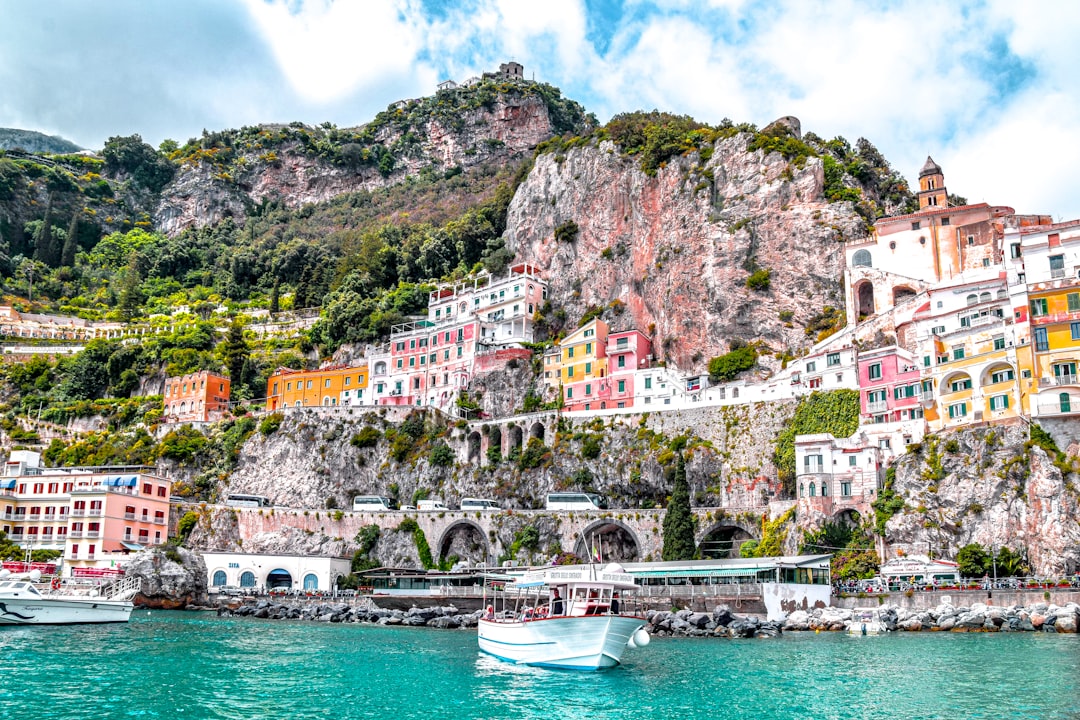
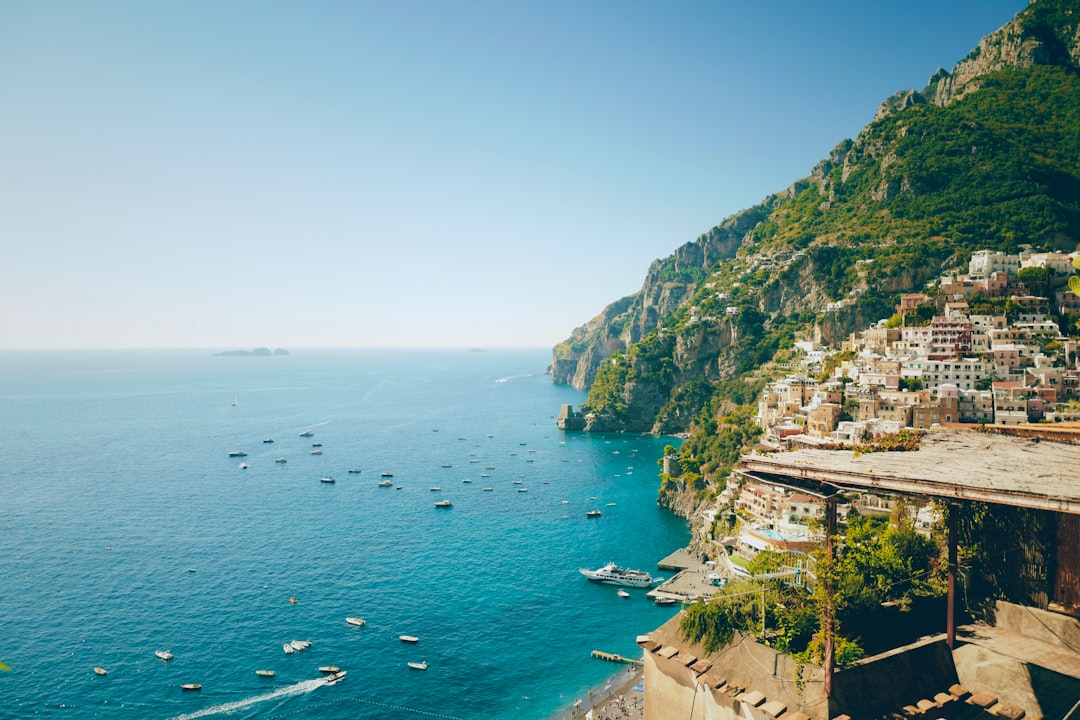
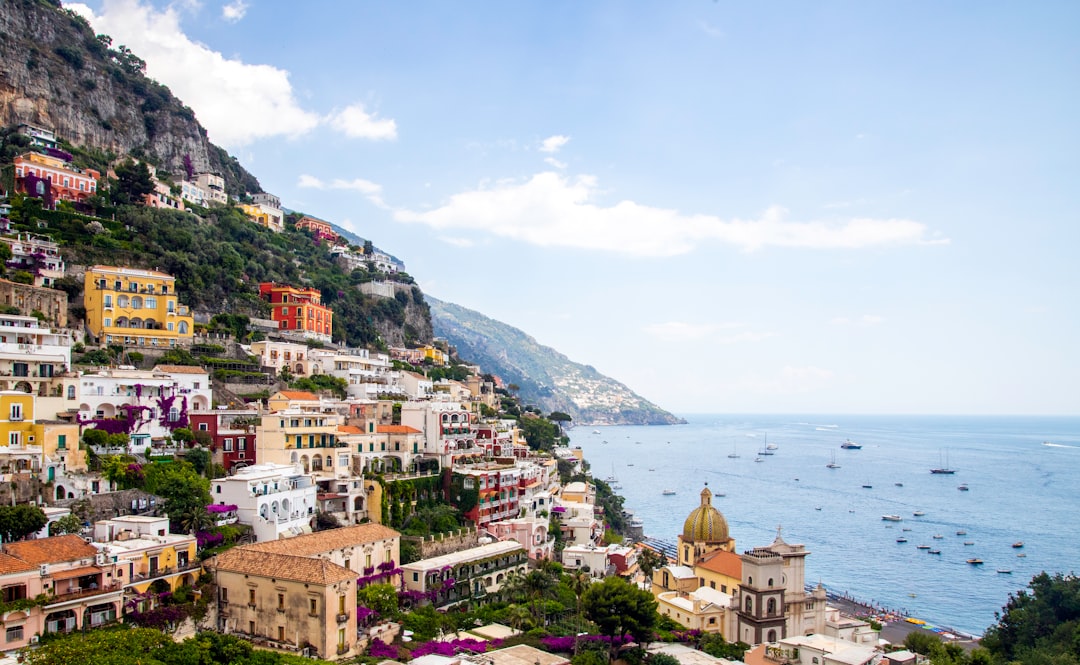
The cliffs between Positano and Amalfi make no sense from above. They need distance and the sea in the foreground to read correctly. From the water, the towns appear as stacked geometry, colorful and vertical, piled in ways that seem structurally implausible until you're below them. The grottos open where you wouldn't expect them. The scale of the place becomes clear.
For groups staying along the coast or in a villa near Positano or Ravello, a boat day is not an optional activity to schedule around lunch. It tends to be the experience that anchors everything else in memory. Not the town visits, not the restaurants. The day on the water.
This guide covers how to do it without the mistakes most people make.
What does an Amalfi coast boat day actually cover?
A full Amalfi coast boat day typically departs from Positano or Amalfi between 9 and 10 AM, covering the western stretch of coastline from Nerano to Amalfi town. A private or small-group charter runs 7 to 8 hours with stops at Li Galli Islands, the Fiordo di Furore, and the Emerald Grotto near Conca dei Marini. Two to three swim stops are standard, and no two routes run exactly the same.
From Positano, the route moves west first, toward the Li Galli Islands and the bay at Nerano, before heading east along the main concentrated stretch: Praiano, the fjord opening, the grotto, and eventually Amalfi harbor for a midday break.
The coast runs 60 kilometers in total, from Positano to Salerno. A single day covers the central 25 kilometers where the cliffs are tallest and the coves most sheltered. The eastern section toward Cetara and Vietri sul Mare is quieter, worth including if the group wants more time anchored with fewer boats around them.
The Amalfi Coast has been a UNESCO World Heritage Site since 1997, recognized for a cultural landscape shaped by centuries of terraced agriculture and maritime settlement. That designation means legally constrained development along the shoreline. The villages look today much as they did a hundred years ago. That landscape is only fully legible from outside it.
Private charter or shared tour: what works for a group?
Most groups book a shared tour first because the per-person price looks lower. A €50 ticket appears more reasonable than €1,400 for a full-day private charter. The arithmetic changes when the group is already six people.
On a private charter, the day is yours. Departure time, swim stop duration, whether to anchor inside the Furore fjord or sail past, how long to linger at Li Galli. The skipper knows the water and the route is negotiable the morning you leave. If the fjord is calm, you stay longer. If the group wants a second hour at anchor, the boat doesn't leave.
On a shared tour with twelve strangers, the itinerary runs on a fixed schedule. Everyone leaves together, stops at the same anchorages for the same periods, and moves on when the plan says to. The three other boats that booked the same package arrive at the same swim spots at the same time.
At six people, a private charter at €1,400 runs roughly €233 per person. A shared tour runs €70 to €120 per person, for a substantially different quality of day.
Operators worth considering: Lucibello has run boats from Positano since 1940, with both private and group charter options and an established local reputation. Amalfi in Style and Fly With Me offer English-speaking crews on private gozzo boats. For larger groups of 10 or more, Lucibello's Lady L yacht accommodates up to 40 people across two sun decks with an indoor lounge. For groups of 6, a traditional gozzo is the right size and the right feel.
Where you'll actually go
The western stretch covers the coast's most visually concentrated section. These are the stops that matter.
Li Galli Islands
Three small islets anchored between Positano and Praiano, about 3 kilometers offshore. The water is clear and the anchorage calm in the morning before the afternoon wind arrives from the southwest. Local legend places Homer's sirens on these rocks, the ones that drew sailors into the shallows. The practical reality is that it's a sheltered swim spot with no road access and few boats before 10 AM. Most private charters arrive here first.
Best for: Groups who want the first swim of the day in calm, uncrowded water. Why it works: The anchorage stays quiet on weekday mornings; the surrounding rock is dramatic without requiring a hike to access it. Skip: Lingering past 11 AM when other boats begin to arrive.
Fiordo di Furore
A narrow fjord cut into the cliff face between Praiano and Conca dei Marini. The rock walls close to around 30 meters apart. A stone bridge crosses the opening high above. The water at the base is cold and green-blue, shaded even in midsummer. Local cliff-diving competitions use this fjord. Most charters anchor here briefly, long enough to swim and look up at the bridge.
Best for: The visual impression. This is the stop that photographs least accurately. Why it works: The scale is impossible to convey from above. You need to be in the water, looking up, to understand what the cliff actually is. Skip: Spending more than 45 minutes here. It's a powerful stop, not a long one.
Emerald Grotto (Grotta dello Smeraldo)
At Conca dei Marini, a sea cave accessible by rowboat from an anchored charter. Sunlight enters through an underwater opening and refracts inside, giving the water a luminous green quality that shifts with cloud cover and time of day. Quieter than the Blue Grotto at Capri and more atmospheric. Worth entering by rowboat if the sea is calm enough.
Best for: Groups who want the cave experience without the famous Capri queue. Why it works: The light effect is subtle rather than theatrical. It rewards patience over spectacle. Skip: Setting expectations for the Blue Grotto. This is a different thing.
Amalfi town
Most full-day routes stop for 1.5 to 2 hours in Amalfi harbor. The cathedral square is worth the walk up from the waterfront. Lunch at a harbor-facing trattoria, one coffee or gelato, and reboard. Arriving by boat at 12:30 PM puts you ahead of the road traffic that builds through the morning from the west.
Best for: Groups who want to actually spend time in the town, not just see it from the sea. Why it works: The boat arrival bypasses the parking situation and the bus traffic entirely. Skip: The most prominent harbor-facing restaurants. Walk one street back.
Nerano
A small fishing village east of Positano, accessible by boat or by a footpath that most visitors skip. Known locally for pasta al pesto di zucchine. Some itineraries stop here for lunch instead of Amalfi town. Quieter, harder to reach by land, which is precisely why it works.
Best for: Groups who want lunch away from the tourist circuit. Why it works: The village hasn't been substantially redone for visitors. The restaurants reflect local prices, not coastal premium markup. Skip: Expecting nightlife or evening activity. Nerano functions as a lunch stop, not a base.
What do most people get wrong on an Amalfi Coast boat day?
The most common mistake on an Amalfi coast boat day is trying to add Capri. Capri sits 25 kilometers northwest of Positano; the crossing takes 45 minutes each direction. A full day on the Amalfi coast covers 7 to 8 hours properly. A Capri day trip is a separate day. Combining them compresses both into something that satisfies neither.
The second mistake is large shared tours. A boat carrying 40 people on a fixed schedule doesn't become something else because the coast is beautiful. The swim stops are brief, the anchorages are shared with other boats on the same package, and the experience is fundamentally organized tourism rather than the coast.
Third: departing late. The swim stops on the western coast are calm in the morning. By midday, wind picks up from the southwest, making the return rougher and the smaller coves choppy. A 9 AM departure reaches Li Galli in flat water. A 10:30 AM departure might not.
Fourth: treating the Emerald Grotto as the centerpiece. The Blue Grotto at Capri is the famous one, with the famous queue and the famous color. The Emerald Grotto at Conca dei Marini is quieter and better experienced as a stop within a longer day, not as the reason for it.
For a fuller picture of how the boat day fits into a week along the coast, the Amalfi Coast itinerary guide covers the full sequence.
Is a boat day worth it for a group that isn't focused on water activities?
Yes. The Amalfi Coast boat day is not primarily about swimming, though the swimming is good. It's about seeing the coast from the only angle that reveals its actual scale. The road above offers guardrails and glimpses. The water offers the coast.
Groups not particularly drawn to water activities still find the day holds up because it solves the logistics of moving along the coast more cleanly than anything on land. The road from Positano to Amalfi in July takes 90 minutes by car and involves parking searches, buses, and stop-start traffic. By boat, the same distance takes 40 minutes with a swim in between.
The towns of the Campania coast were founded as maritime settlements long before they became destinations. The Campania regional tourism authority notes that the relationship between the villages and the sea is structural, not decorative. That history is most visible from the water, where you can see the whole vertical arrangement of a settlement and understand why it was built exactly where and how it was.
How does the Amalfi Coast boat day compare to others in the region?
Amalfi Coast vs. Capri
Capri is an island, not a coastline. A day trip to Capri means a 45-minute hydrofoil crossing each way and arriving at the island's most visited spots alongside every other group that left the mainland that morning. The Blue Grotto is striking, though queue times to enter by rowboat can run 45 to 60 minutes. Capri deserves its own day and doesn't share a day with the coast well. See the full comparison at Capri vs. the Amalfi Coast for groups.
Amalfi Coast vs. Sorrento Peninsula
The Sorrento Peninsula boat day, particularly toward the Baia di Ieranto, is less visually dramatic than the Amalfi stretch but considerably less crowded. A good option for groups returning to the region who already experienced the Positano-to-Amalfi route on a previous voyage and want a quieter alternative with exceptional water clarity.
Amalfi Coast vs. Gulf of Naples
The Gulf of Naples, with Ischia and Procida, trades Amalfi's cliff drama for gentler harbor towns and fewer boats. Ischia suits groups wanting thermal baths alongside swimming. A different experience worth its own planning rather than a direct comparison.
How to experience an Amalfi Coast boat day without planning it yourself
The friction in organizing a private boat day is not the cost. It's the logistics. Identifying a reputable charter operator, confirming English-speaking crew, agreeing on a route in advance, arranging catering or a lunch stop, coordinating departure from the villa, and managing the return transfer.
For most groups, this is the part that turns into a group chat with twelve competing links and someone booking something that looked good in a photograph. The skipper speaks limited English. The boat is smaller than it appeared. The lunch stop is a harbor restaurant everyone else found on the same travel app.
A well-composed voyage includes the boat day already designed. The charter is vetted, the skipper is briefed on the group's pace and preferences, and the route reflects the time of year and the sea conditions that week. The group arrives at the marina. The day begins.
That's what you get when the planning is handled before you arrive. Wndrlust voyages on the Amalfi Coast include a private boat day built into the architecture of the week, not as an optional activity to add on but as the day the rest of the itinerary is arranged around.
Conclusion
The Amalfi Coast by road and the Amalfi Coast by water are two different experiences of the same place. The road has the reputation. The water has the coast.
A well-executed boat day gives a group something the road cannot: the coastline at the right distance, in the right light, with no one else setting the schedule. The morning swim at Li Galli in flat water. The narrow shadow of the Furore fjord. The gelato in Amalfi at 1 PM with the harbor behind you and the afternoon still ahead.
Done carefully, it tends to be the day that defines the voyage. Done carelessly, on a shared cruise with forty strangers or by trying to fold Capri into the same eight hours, it becomes a pleasant day that could have been much more.
For the rest of a week's structure, the Amalfi Coast group travel guide covers base towns, ferry logistics, and how the days connect.