TL;DR: Amalfi coast group travel works best when you stop trying to cover it. Pick one base town, build two or three anchor experiences — the boat day foremost among them — and use ferries rather than the coastal road. Groups that arrive with a full itinerary tend to leave frustrated. Groups that arrive with a villa and some room in the week tend to want to come back. This guide covers the base towns, how to move, and what a well-designed group week actually looks like.
Quick Pick: Where to Base, and When to Come
- First-time Amalfi group, want the iconic setting: Positano. Expect the highest prices and the most steps. Book villas 10 or more months ahead for June through August.
- Groups of 8–12 who want villa value and a village feel: Praiano. Fewer steps, ferry access at Marina di Praia, mid-coast position between Positano and Amalfi.
- Groups prioritizing views, pace, and quiet over beach access: Ravello, elevated 365 meters above the sea, with summer concerts and genuinely low crowds year-round.
- Groups that need central ferry access above everything else: Amalfi town. Hub-and-spoke logistics, ferries running in every direction.
- Best months: May, late September, October. High-season crowds and coastal road traffic peak in July and August.
- Budget signal: The Amalfi Coast runs 30 to 60 percent more expensive than Rome, Florence, or Venice across accommodation, dining, and transport. Plan accordingly.
| Town | Best for groups | Tourism level | Sea access | Price signal |
|---|---|---|---|---|
| Positano | Iconic setting, first-time visits | Very high in peak season | Direct pier | €€€€ |
| Praiano | Villa value, village atmosphere, fewer steps | Moderate | Ferry at Marina di Praia | €€€ |
| Ravello | Views, quiet, cultural programs | Low to moderate | 30-min drive to coast | €€€ |
| Amalfi | Central access, ferry hub | High | Central ferry pier | €€€ |
Introduction
The road from Salerno to Positano takes roughly an hour. In July, it can take three. The Amalfi Coast — thirteen kilometers of cliff-face towns, switchback roads, and UNESCO World Heritage coastline — was not designed with groups of twelve people in rental cars in mind.
Most groups learn this the hard way. They book a base hotel, rent a vehicle, and spend the first two days making no progress and the next two trying to recover. The coast does not reward that approach. It rewards the group that understands what it is for.
This guide is built around a different framework. One base town. Ferry movement between towns. A private boat day as the anchor experience. A villa with enough outdoor space that the group does not need to leave it every evening. That structure, more than any particular restaurant or hike, is what makes a group week on the Amalfi Coast feel like the thing people describe when they get home.
What Does Amalfi Coast Group Travel Actually Look Like?
Amalfi coast group travel works best as a villa-anchored week with one base town, movement by ferry rather than road, and the boat day as the central experience around which everything else arranges. Groups of 8–12 find the strongest combination of privacy and value in Praiano, Ravello, and select Amalfi properties, with Positano serving groups who want the iconic setting at a higher price point.
The coast is smaller than most maps suggest. From Positano to Amalfi takes 25 minutes by ferry; from Amalfi to Ravello, 30 minutes by car. Everything the coast offers is accessible from a single base. The mistake most groups make is not the destination. It is the plan.
In 2024, overnight stays on the Amalfi Coast exceeded 2.3 million, the highest figure on record, representing nearly 9 percent growth since 2019. The coast is crowded in peak season in a way its single coastal road and compact town centers struggle to absorb. That is not a reason to avoid it. It is a reason to plan differently from everyone who doesn't.
Where Should a Group Base Itself?
The four towns most practical for group villas each offer a different trade-off between price, access, and atmosphere. The choice depends less on prestige and more on what the group actually wants from the week.
Positano
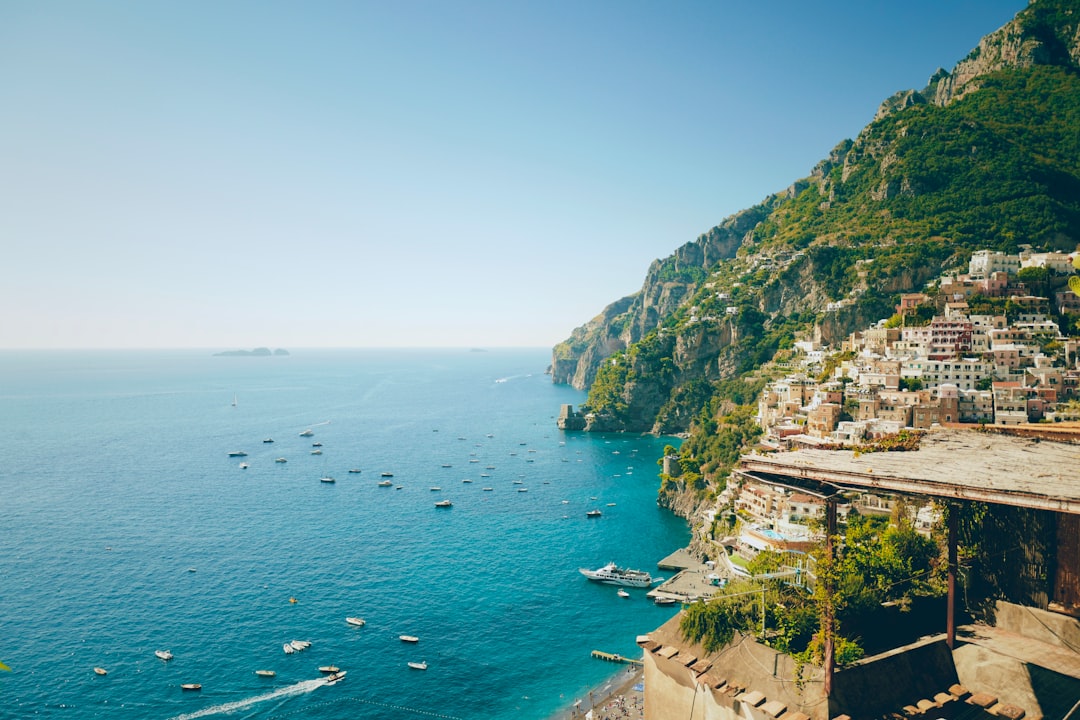
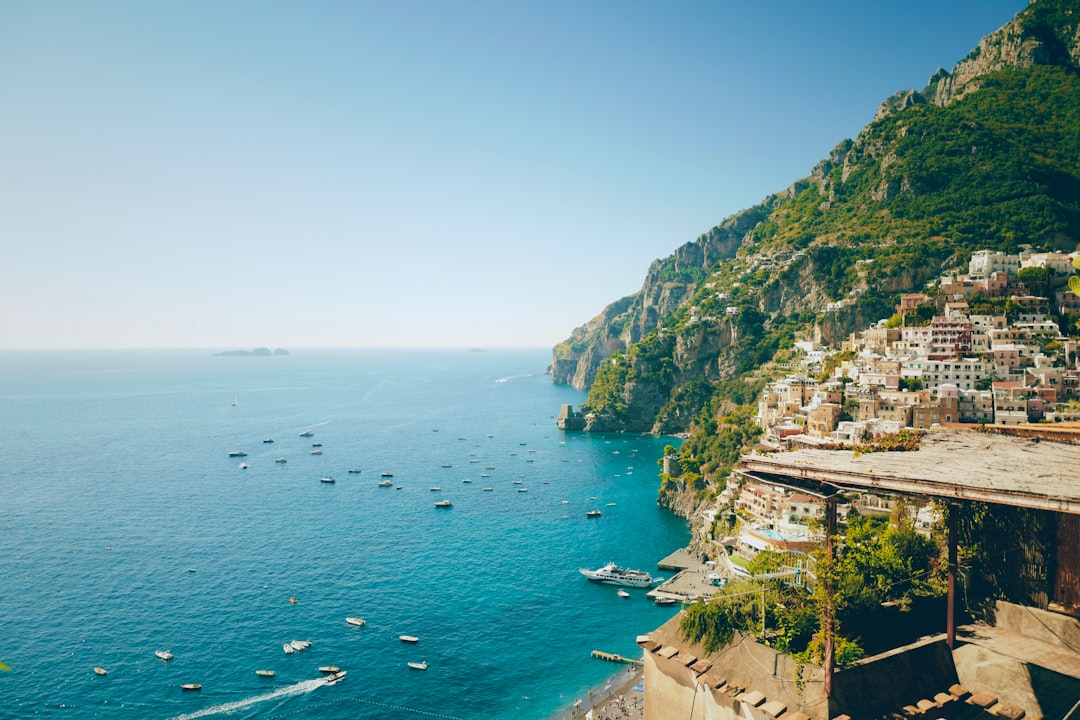
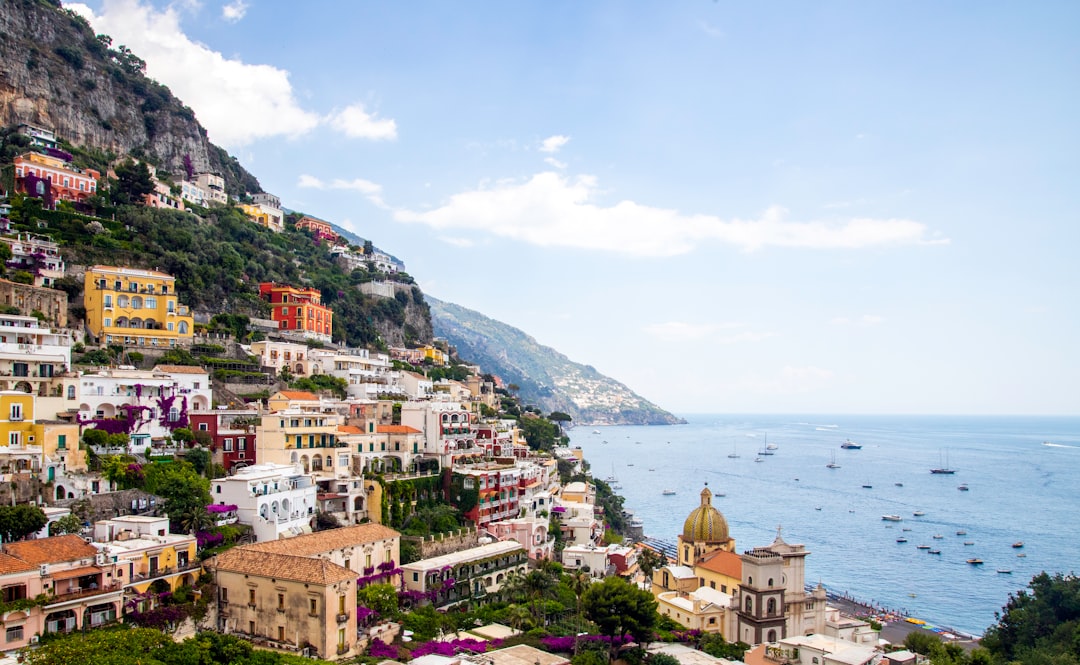
Positano has the most recognizable profile on the coast. Pastel houses stacked against the cliff, a small beach at the bottom, ferries to Capri, and a cosmopolitan energy that has been cultivated over decades. For groups, it comes with complications. The town is built on steps. Most villas require navigating narrow lanes with no vehicle access, which means arriving with large luggage is a genuine logistical problem. Villa availability for groups of 8 or more is more limited than elsewhere on the coast, and the price premium is consistent.
- Best for: First-time Amalfi groups who want the full iconic experience and are prepared for the logistics
- Why it works: Unmatched atmosphere; direct ferry pier; strong restaurant scene within walking distance
- Skip if: Your group has mobility considerations, heavy luggage, or wants to manage costs carefully
Praiano
Most guides mention Praiano as a footnote to Positano. Groups who stay there tend not to regret it. Positioned between Positano and Amalfi, Praiano is a functioning village. It has fewer stairs than any other coast town, a small marina with ferry access at Marina di Praia, and private villa options that offer consistently better value than equivalent properties in Positano. The pace is slower. The evenings are quieter. The morning light is the same.
- Best for: Groups of 8–12 looking for villa value without sacrificing mid-coast position; groups on their second or third visit to Italy
- Why it works: Fewer steps, some parking availability, strong position for day trips in either direction
- Skip if: The group specifically wants Positano's energy and social scene and is prepared to pay for it
Ravello
Ravello sits 365 meters above the sea. It does not have a beach. What it has instead: some of the most extraordinary views on the coast, a summer music festival with concerts in Villa Rufolo's cliffside garden, and a quiet that the towns below rarely achieve. For groups that want the Amalfi Coast without the Amalfi Coast crowds, Ravello is the version that holds up.
- Best for: Groups that prioritize pace, culture, and panoramic scenery over direct sea access; return visitors to Southern Italy
- Why it works: Low foot traffic even in peak season; private villa terraces with views that justify the elevation; the coast is 30 minutes by car
- Skip if: Daily beach time and boat access are central to the group's vision of the week
Amalfi
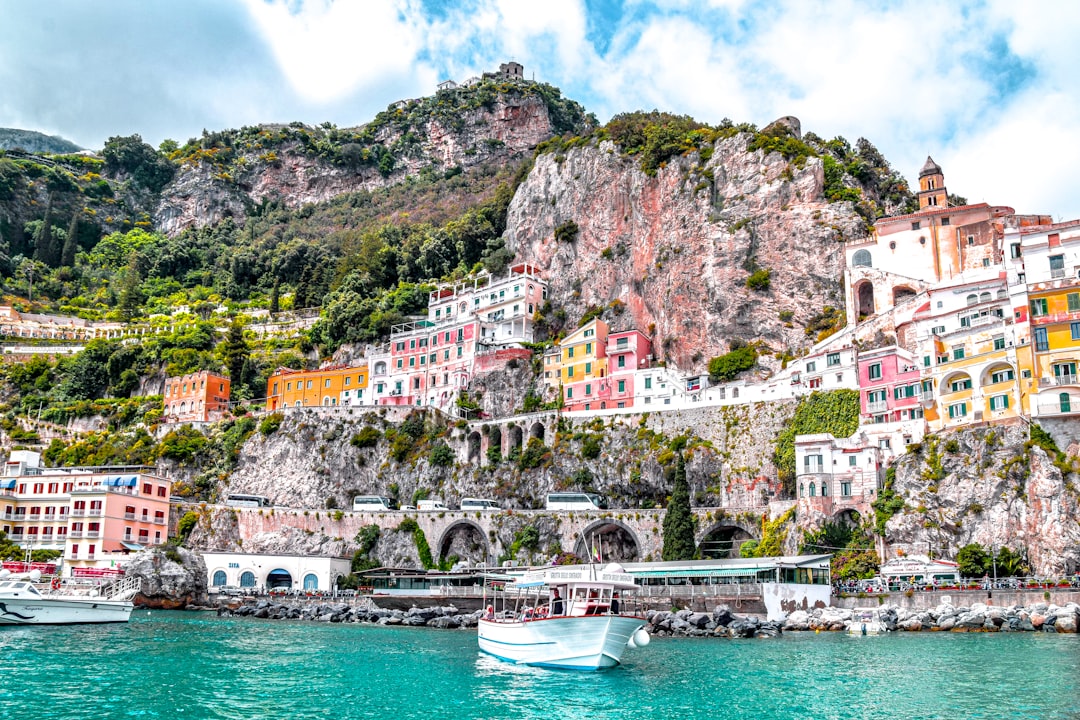
Amalfi (the town) is the most practical base on the coast. The ferry pier is central, ferries connect to Positano, Ravello, Capri, and Salerno, and the Duomo di Amalfi is within walking distance of most properties. The town is more tourist-facing than Praiano or Ravello, and prices are closer to Positano. Groups who need central logistics use Amalfi. Groups who want atmosphere tend to land elsewhere.
- Best for: Groups prioritizing ferry access and central logistics; shorter stays of four nights or fewer
- Why it works: Hub-and-spoke access to the full coast without a rental car
- Skip if: The group wants a village feel, quiet evenings, or the sense of being slightly removed from the peak tourist flow
How Do Groups Actually Move Around the Coast?
For groups on the Amalfi Coast, ferries are the primary mode of movement between towns from May through October. The coastal road (SS163) carries a single lane in each direction through dozens of switchbacks; moving a group vehicle during peak season adds 30 to 90 minutes to any journey that a 20-minute ferry covers directly.
The coast has no train service. The SITA bus network connects towns along the road, with tickets starting at €1.30, but buses are frequently overcrowded in summer and the afternoon service from Amalfi to Sorrento is known for long waits and buses that pass full. For groups, the bus is a backup and a way to send two people ahead, not a primary plan.
The ferry network is the cleaner option. From May through October, ferries run between Positano, Amalfi, Ravello, Capri, Naples, and Salerno. Most crossings run 20 to 40 minutes. The approach by sea gives you the correct angle on the towns, and arrives without the coastal road's congestion. For a group of 8 to 12, the ferry cost per person per day is low compared to the alternative.
Two transport moments require advance planning. Arrival with luggage from Naples airport benefits significantly from a booked private minivan, which removes the question of rental cars entirely and is the cleanest group logistics solution. Any departure with an early Naples flight warrants the same arrangement. The providers that handle this well fill up early; confirm before confirming flights.
The Boat Day
This is the experience most groups describe when they talk about the trip afterward. A private boat, typically 30 to 48 feet for groups of 8 to 12, that spends the day working the coastline: anchoring at coves unreachable from land, swimming off the stern, stopping for lunch near Positano, passing through the Fiordo di Furore, returning at sunset with everyone quietly salt-dried and satisfied.
Private boat rentals along the coast start at roughly €200 per hour. Full-day rates for a suitable group vessel run €600 to €2,000, depending on vessel size and season. For a group of 10, the per-person cost of a full day with a skipper lands between €60 and €200. Group boat tours exist at a lower price point, but they carry 12 to 20 passengers across multiple shared pickup stops, which changes the character of the day entirely.
Most vessels are licensed to carry up to 12 passengers. For groups larger than 12, two boats that sail together is the standard arrangement, and has its own appeal.
Book the boat day before you book anything else. In peak season, quality private operators fill four to six weeks out. May and September stay manageable with a few weeks' notice. The boat day is the week's anchor; the rest of the schedule should arrange around it.
What Is the Right Rhythm for a Group Week?
The Amalfi Coast does not reward trying to do everything. The towns are close, and the urge to see all of them in a single week is understandable and, for groups, consistently counterproductive.
A well-designed group week runs something like this: the first day to arrive and calibrate (the coast takes time to settle into), the boat day as the midweek anchor, one day trip to Capri or Ravello depending on base, one morning on the Path of the Gods if the group walks, and the rest of the time at or near the villa. Meals on the terrace. Evening walks to the village. Late nights that no one planned.
Our Amalfi Coast 7-day itinerary maps the full structure for groups working within a standard villa week, including timing for the boat day and how to sequence Capri without losing a full day to logistics.
The groups that find the coast works for them are the ones who gave up trying to cover it. The coast is small. Everything is accessible. The pace that feels slow on arrival is the one worth keeping.
What Gets Skipped, and Why Most Groups Get This Wrong
Three planning mistakes appear consistently in groups visiting the Amalfi Coast.
The first is driving. The SS163 coastal road is one of the most photographed drives in Italy and one of the least practical for a group in peak season. July and August bring genuine traffic standstills. The road is narrow enough that a passing bus requires pulling to the shoulder; navigating it with a large rental vehicle, for the first time, while managing a group's expectations is a reliably bad afternoon. The ferry system is not a fallback option. It is the correct option.
The second is staying for too few days. The Amalfi Coast is a 5-to-7-day destination for a group that wants to experience it rather than complete it. Three nights gets you settled. Five gives you a week worth making. Two nights is a day trip with heavy luggage.
The third is treating the villa as an afterthought. The accommodation is not where you sleep between activities. It is where most of the trip happens: the morning espressos before anyone has made a plan, the dinners that last three hours, the afternoon hours when the coast is at its hottest and the pool is the only sensible answer. A villa with a private terrace, a pool, and a kitchen capable of a group dinner changes the rhythm of every day. For a detailed look at what to prioritize in property selection for groups of 8 to 12, the Amalfi Coast villa guide covers the decision logic in full.
Amalfi Coast vs. Tuscany vs. Capri: How to Choose for a Group
Amalfi Coast vs. Tuscany
Tuscany is the stronger choice for groups that want a villa experience centered on food, wine, and countryside. The pace is slower, villas tend to be larger, and the food-and-wine calendar (truffle season, vendemmia) gives the week a structure the Amalfi Coast doesn't offer. The Amalfi Coast wins when the group wants dramatic coastal scenery, boat access, and the specific energy of Southern Italy's seaside. The two regions are not substitutes. They are different registers of the same country. The Tuscany group travel guide covers the villa-week approach on the inland side, including which region works for which type of group.
Amalfi Coast vs. Capri
Capri works as a day trip from any Amalfi base, and it is one of the most satisfying day trips on the coast. As a week-long base for a group, it becomes expensive quickly and can feel island-claustrophobic by day four. Most travelers who know both recommend using Capri as the anchor stop on the boat day, not as the week's center of gravity.
How to Plan an Amalfi Coast Group Trip Without Coordinating It Yourself
A group villa on the Amalfi Coast requires six to eight weeks of back-and-forth to book independently: the villa, the private boat, the airport transfer from Naples, the restaurant reservations, the shared cost split, the group thread negotiating between Positano and Praiano. None of that coordination is complicated on its own. Collectively, it is the reason most groups either default to a hotel or push the trip back another year.
Wndrlust designs villa-based group voyages on the Amalfi Coast with the coordination built in. The villa, the boat day, the transfers, and the curated experiences worth having are composed before the group arrives. What you bring is the group. Explore current Amalfi voyages to see how the week comes together.
Conclusion
The Amalfi Coast operates on its own terms. It is not logistically generous to groups who try to force it, and it rewards the ones who arrive with a plan light enough to leave room for the place.
Pick your base with care. Book the boat before you book the flights. Use ferries between towns. Stay long enough that the days stop feeling scheduled. The groups that come back are not the ones who saw the most towns. They are the ones who stayed long enough to stop counting them.